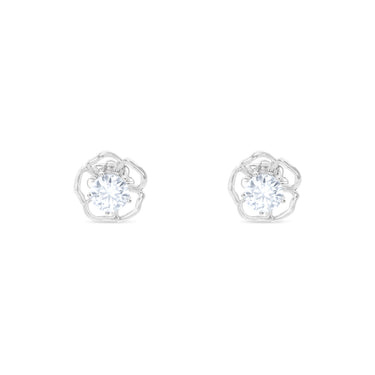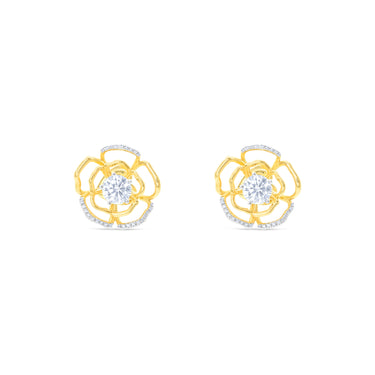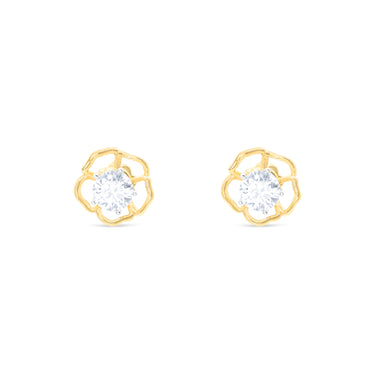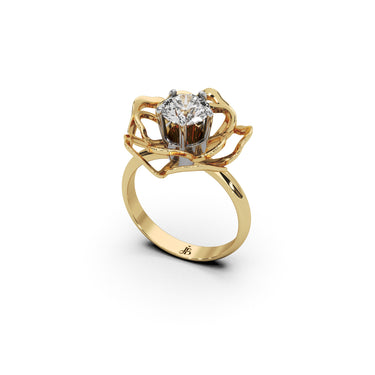


The side profile decides how a ring meets a sleeve, a neighboring band and the hand. “Low set” and “high set” are relative descriptions. Ask for the actual height and its reference points, then examine the basket and the space around it.
Measure the feature you are comparing
An overall ring height can be measured from different reference points. Ask the jeweler to show where the measurement begins and ends. A drawing that measures from the bottom of the shank is not directly comparable with one measuring the setting above the finger.
Also distinguish diamond depth from setting height. The stone needs a suitable seat and clearance, but basket construction, the shank and surrounding details influence the finished profile.
Compare practical behavior
| Consideration | Lower profile | Higher profile |
|---|---|---|
| Sleeves and gloves | May be easier to accommodate | May require more attention to catching and clearance |
| Wedding-band fit | A low basket may obstruct a straight band | Some designs offer room for a band beneath the setting |
| Visual impression | Can feel more integrated with the hand | Can give the center a more elevated presence |
| Impact exposure | Still needs appropriate care | Raised components need thoughtful protection during activities |
These are design tendencies, not guarantees. An awkward prong can catch even on a low ring, while a well-finished higher setting may be comfortable for its wearer.
Try the wedding band at the same time
A low center can extend outward near the finger and prevent a straight band from sitting closely. A taller basket can provide clearance, but height alone does not establish a flush fit.
Try the actual pair or a reliable mock-up. Look from the side to see whether a band touches the basket, prongs or diamond edge. A visible gap can be an intentional design choice; forcing two rings together may create unwanted contact.
Curved bands and suitable spacers are possibilities to discuss, rather than automatic remedies for every setting.
Test a normal day
During a fitting, gently check the ring with a sleeve and, if relevant, an everyday glove. Rest your hand on a surface and notice the profile. Do not perform an impact or snagging test with force.
Think about carrying bags, working with your hands and the activities for which you already remove jewelry. A low setting does not make an engagement ring suitable for weightlifting, heavy manual work or pressure from equipment.
Approve the side view
For a custom ring, request a true side view, center-stone dimensions and a statement of overall height. Ask how the proposed wedding band will sit beside it. If possible, compare a physical sample rather than choosing from perspective renderings alone.
Height and clearance are separate measurements

An illustrative ring might rise 6 mm above the reference surface on the inside of its shank; another might rise 8 mm. Those numbers are comparable only if both use the same reference points. They do not, by themselves, tell you whether a wedding band can sit beside the ring.
The diagram separates total setting height from the area a neighboring band needs. A low basket may project sideways; a higher basket may still leave insufficient clearance. Test the intended band's width and profile, rather than an unspecified “standard band.”
| Detail to confirm | Record it this way |
|---|---|
| Height | Millimeters, with both reference points named |
| Wedding band | Exact design, width and thickness |
| Contact | Where the two rings meet when worn |
| Gap | Whether it is intentional, and its approximate size |
| Daily movement | What you notice while flexing the hand and moving a sleeve |
Try the stack together where possible. A static rendering cannot reproduce every movement or establish that two surfaces will never rub.
Choose the profile around the way the ring will be worn. A clear side view and the intended wedding band answer more than a height label can.
Source: Brilliant Earth guide to high and low ring settings.