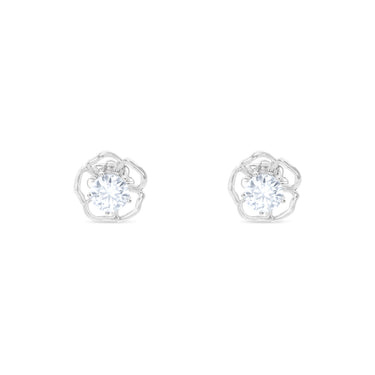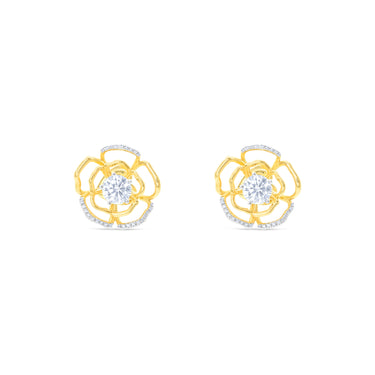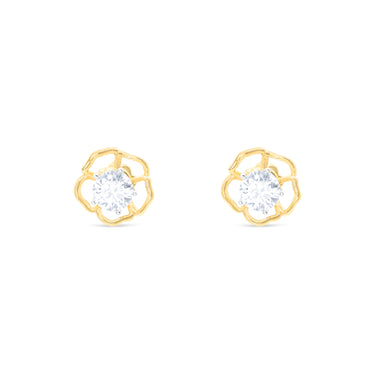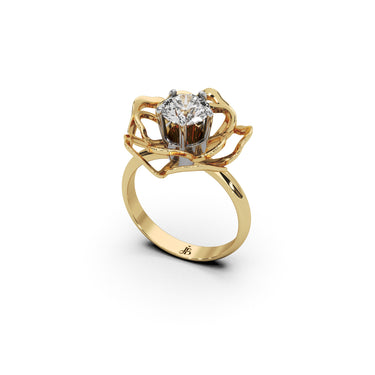


A spacer adds a quiet line of metal between rings and changes where they touch. It may help separate a vulnerable setting from a neighboring band, but its width, thickness and edges decide whether it actually improves the contact.
Find the actual contact point
Look at the rings together from the side. Does the wedding band touch a smooth shank, the engagement-ring basket, a prong or a diamond edge? Those are different contacts with different implications.
Normal movement matters. A pair that appears separated when perfectly aligned may touch as one ring turns or the hand moves. Ask a jeweler to assess the complete combination without forcing the bands together.
| Observation | Useful next question |
|---|---|
| A band meets a protruding basket | Would a different profile or curved band fit better? |
| Diamond-set surfaces face one another | Can the proposed arrangement reduce unwanted contact? |
| A gap remains after adding a spacer | Is the gap intentional, or does the spacer fail to address the obstruction? |
| The stack feels tight | Is the combined width appropriate for this finger? |
Choose dimensions for a purpose
The spacer's width determines the additional separation along the finger. Its height and cross-sectional shape influence where neighboring rings meet it. A thin-looking band from the top can still have a substantial profile from the side.
If the intention is to preserve a particular silhouette, try several actual samples. A decorative spacer with raised details may introduce fresh contact points instead of providing a smooth intervening surface.
Match the material and finish thoughtfully, but do not assume that identical metal color guarantees identical wear behavior. Construction and contact are still decisive.
Reassess the whole stack
Adding a third ring increases total width. Check how the group passes the knuckle, sits at the finger base and feels between neighboring fingers. An individual ring size is not a complete description of the combined fit.
Wear the rings in the order you intend to use. Changing their sequence can change the contact and the appearance. If they will sometimes be worn separately, assess those combinations too.
Compare other options
A curved or contoured wedding band may follow a low basket more naturally. A designed gap may also be acceptable. In some cases the engagement-ring or band construction needs attention before any spacer is considered.
Do not use a spacer to conceal an insecure stone, worn prong or damaged band. Those conditions need professional examination.
Follow the contact around the whole stack
Look from the side and underside as well as from above. A spacer can hold two bands apart at one level while a raised diamond setting still reaches over it. Ask where contact occurs during ordinary movement, not only in a posed photograph.
For an illustrative stack of a 2.0 mm engagement shank, 1.0 mm spacer and 2.5 mm wedding band, the nominal combined width is 5.5 mm. That arithmetic describes the three widths; the wearing feel and actual gaps still depend on the profiles and fit.
| Check | Reason |
|---|---|
| Spacer edge and thickness | A new sharp edge can create its own contact problem |
| Diamond or prong overhang | It may extend beyond the band below it |
| Underside fit | The full width can feel tighter than one ring |
| Visible gap | Decide whether it suits the design |
| Surface marks after wear | Ask for inspection if contact appears to be causing damage |
Do not use a spacer to compensate for a loose stone or damaged prong. Resolve that condition before evaluating the stack.
A spacer succeeds when the contact is understood. Choose it for the way the complete stack behaves, as well as the line it adds.
Sources: GIA ring-setting guide; Just Brilliant curved wedding bands.