

Prongs shape the outline around a stone while holding it in place. A claw tapers to a point, a round tip presents a softer dot, and a V-tip can follow a pointed corner. Their appearance is easy to compare; their security depends on how the finished setting contacts the stone.
Understand the visible shapes
A claw tip can create a fine directional accent. A rounded tip can appear more compact and softly finished. Both can be used on a range of stone outlines when designed and fitted appropriately.
V-tip prongs are a more shape-specific conversation. They can surround a pointed corner, but they must be constructed so the setting does not impose unsuitable pressure on that vulnerable area.
| Prong style | Visual character | Practical question |
|---|---|---|
| Claw | Tapering, directional tip | Is it smooth, adequately formed and correctly seated? |
| Rounded | Softer, rounded end | Does it secure the stone without unnecessary coverage? |
| V-tip | Metal around a pointed corner | How is the corner supported and protected? |
Separate shape, number and workmanship
Tip style and prong count are different decisions. Four or six prongs around a round diamond can each be finished with different visible shapes. A suitable arrangement depends on the stone and the overall mounting.
Examine whether the prongs align intentionally, whether the stone sits correctly, and whether there are catching or sharp surfaces. A close photograph may reveal a concern, but it cannot replace a physical assessment of security.
The aim is appropriate support with a finish that suits the design. An extremely fine appearance should not be pursued without considering the metal needed for the actual setting.
Discuss corners and inclusions
For a princess, pear, marquise or heart-shaped diamond, ask specifically about points and corners. Their condition and any nearby clarity characteristics can influence the setting plan.
Covering a surface-reaching feature is not automatically a solution. The jeweler needs to examine it and decide whether the mounting is appropriate. Do not select a prong style solely because it hides a mark in a photograph.
Know when to request an inspection
Arrange attention if a prong begins catching, appears lifted, is visibly worn, or changes after an impact. A stone that moves is a separate reason to stop wearing the jewel and have it examined.
Do not push prongs into place with household tools. The seat and pressure on the stone need professional handling, and making the visible tip look aligned may not make the setting secure.
Approve the detail at the right scale
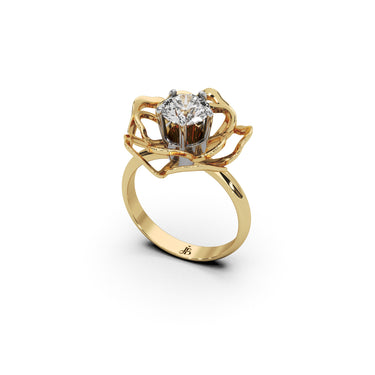
For a custom design, ask for enlarged views of the tips and a view at normal wearing scale. Specify the intended finish without assuming a render shows the exact final metal thickness.
Tip shape and stone contact are different views

The diagram compares visible tip forms. It is not a construction specification or a security assessment. The part seen from above does not show every seat, bearing or area of contact.
| Ask to see | What it helps establish |
|---|---|
| Straight-on view | Tip shape, spacing and visual balance |
| Side view | How the prong meets the stone's edge and crown |
| Point or corner detail | Whether the vulnerable outline is appropriately protected |
| Workshop examination | Whether seats, contact and metal condition are suitable |
A larger tip is not automatically safer, and a fine claw is not automatically insecure. Material, execution, stone condition and the rest of the setting must be considered together.
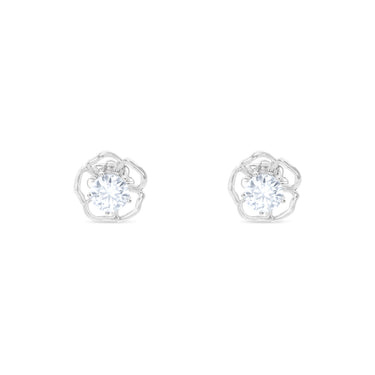
Just Brilliant's Solitaire Studs are described with a four-prong setting. That tells you the arrangement; it does not replace examination of the individual pair or establish that four prongs are the right construction for every gem.
Let the tips complement the silhouette without distracting from their purpose. The contact beneath the visible shape is the detail that needs examination.
Sources: GIA round-diamond prong-setting benchmark; GIA princess-cut V-prong benchmark.