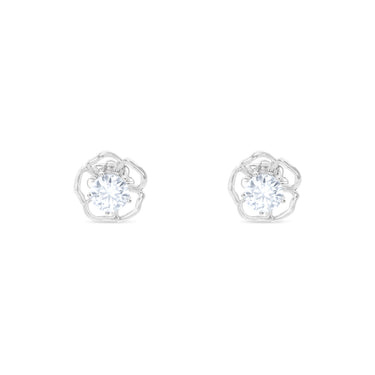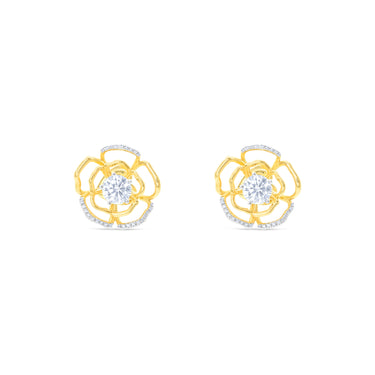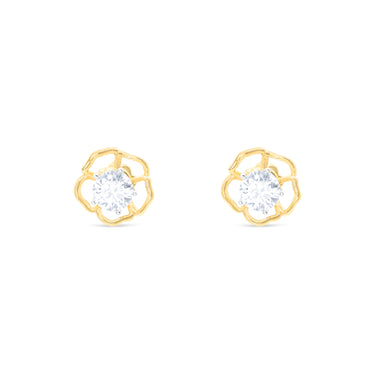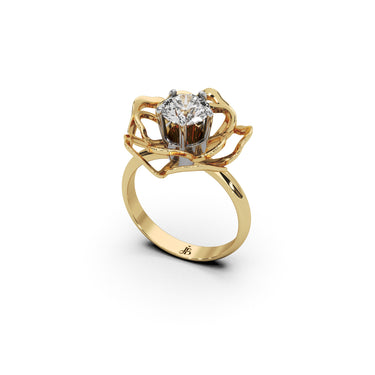


Four and six prong settings offer two ways to hold a round diamond and frame its outline. Four points of metal divide the circle into broader intervals. Six distribute those points more closely around the perimeter. The difference is visible, but a well considered choice also looks beneath the surface at fit, condition and workmanship.
In Just Brilliant's approach to jewelry, a prong is both part of the drawing and part of the structure. Its scale, position and finish should make sense for the actual diamond it holds.
How the number changes the appearance
A four prong arrangement leaves larger spaces between the individual supports. Depending on their placement and shape, the four points can give the round center a slightly more angular frame. Six prongs tend to describe the circular outline through more frequent intervals.
The size of the tips matters as much as their number to the visual result. Four broad tips can be more noticeable than six finely resolved ones. Look at the complete arrangement rather than comparing two isolated numbers.
| Detail | Four prongs | Six prongs |
|---|---|---|
| Visible spacing | Broader intervals between supports | More frequent points around the stone |
| Outline to examine | Whether the frame introduces an angular impression | How the tips follow the circle |
| Construction check | Fit and condition of every contact point | Fit and condition of every contact point |
Security is a construction question
Six prongs can provide additional retention if one support is damaged, but this is not a guarantee against stone loss. A badly fitted or worn setting cannot be judged secure from its prong count. Stone dimensions, the shape of the seats, the metal structure and the condition of the completed ring all require professional attention.
When comparing rings, ask how the chosen setting supports the diamond and what signs should prompt an inspection. A snagging tip, visible damage or movement of the stone deserves assessment before further wear. Attempting to press or bend a prong at home can make the problem worse.
Turn the ring to the side
From above, the diamond dominates the view. In profile, the supporting architecture becomes clearer. Notice how the head meets the band, whether the gallery feels visually balanced and how much room remains for another ring. Two six prong settings can look and wear very differently because the structures beneath them differ.
For a D color lab grown diamond at Just Brilliant, the color selection and the mounting have separate responsibilities. The diamond supplies its own optical character; the 18K gold setting gives it a coherent place on the hand. Neither responsibility disappears when the design looks simple.
Make the choice in the finished ring
Compare four and six prong designs at a similar center size, then look at them from a normal wearing distance. Consider which frame you prefer and whether the profile works with your daily gestures and intended wedding band.
The aim is a round diamond whose surrounding details feel intentional. When the contacts are precise, the transitions are smooth and the proportions are resolved, the setting becomes part of the pleasure of wearing the jewel.