

Natural and lab-grown diamonds have different growth histories. Both can be considered for a Just Brilliant engagement ring. A useful comparison keeps the intended design steady while examining origin, individual stone characteristics and the wearer's preferences. This helps a couple choosing from Tashkent reach a decision without confusing material identity with appearance.
Separate origin from design
A natural diamond formed through geological processes; a lab-grown diamond developed in a controlled growth environment. Natural and lab-grown describe origin. Oval, pear and round describe shape. Solitaire and pavé describe aspects of the ring's composition. These choices answer different questions.
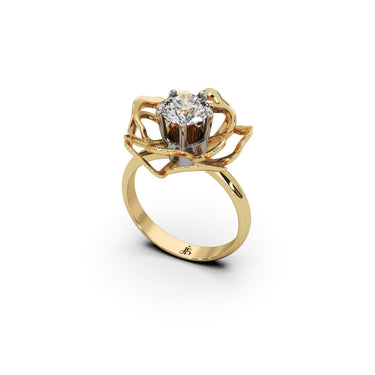
Our Wrapped Solitaire Diamond Ring makes that distinction practical: natural and lab-grown origins are offered within a design available in oval, pear and marquise configurations and three gold colors. Begin with one preferred shape and metal, then discuss the diamond options for that configuration. A design option is not a promise that every stone specification is immediately available.

Compare like with like
Use the same shape, similar visible measurements and comparable lighting. Equal carat weights alone do not make a fair visual match, because different proportions can distribute weight differently. Request information about the particular stones instead of comparing a magnified photograph of one with a generic illustration of the other.
The setting also contributes to the impression. A white-gold solitaire and a yellow-gold pavé ring differ in several ways at once. If origin is the question being decided, hold those design variables steady first.
| Question | What to establish |
|---|---|
| Which origin does the wearer prefer? | Natural or laboratory-grown, stated for the selected diamond. |
| How will the stone appear? | Shape, measurements, facet pattern and views of the actual stone. |
| How will the ring feel? | Setting profile, band width, finger size and compatibility with another ring. |
Treat documentation as specific to the diamond
Appearance alone does not reliably establish whether a diamond is natural or lab-grown. Read its identification and the documentation supplied for the selected stone. Laboratories, report services and issue dates can produce different formats, so compare the meaning of the information rather than expecting identical headings.
If sourcing history or environmental information matters to the couple, ask what evidence exists for that particular stone. Neither origin label alone proves every wider claim about its supply chain. An engagement ring can express a preference without relying on unsupported promises.
Resolve the preference before finalizing the ring
If the proposal is a surprise, consider whether your partner has already expressed a view about diamond origin. For a shared decision, discuss the meaning of the choice before narrowing the final stone. Then record the agreed origin with the creation reference and configuration.
Clients writing from Tashkent can send that brief through our advisor form, including the intended date and receiving destination. Establish the destination arrangements once for the order and keep that confirmation with the specification. Continue with the dedicated natural diamond or lab-grown diamond guide for the next questions to ask.
Explore engagement rings for Tashkent
- Engagement Rings for Tashkent: Discover Just Brilliant
- Lab-Grown Diamond Engagement Rings for Tashkent — Just Brilliant
- Natural Diamond Engagement Rings for Tashkent — Just Brilliant
Editorial illustration inspired by Tashkent. Jewelry is shown as an artistic study.