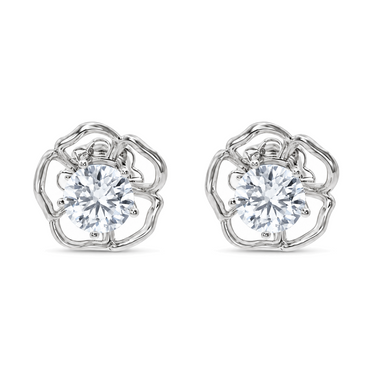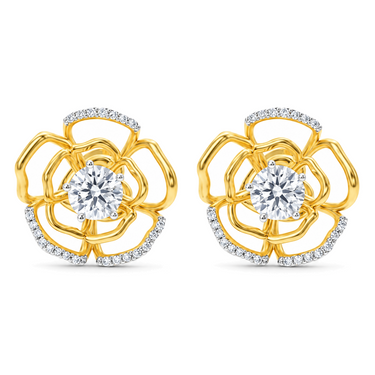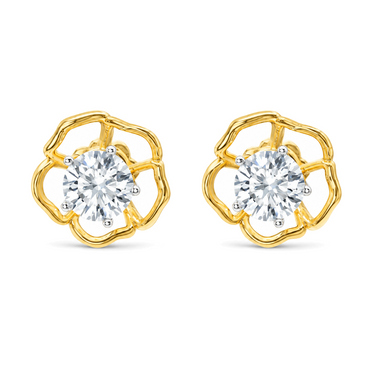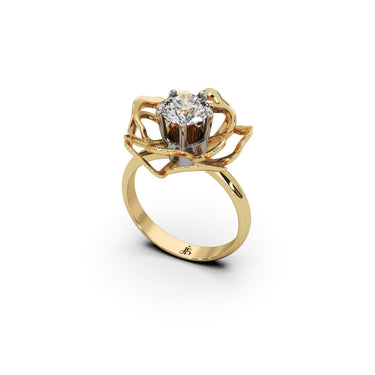


A natural diamond's geological history can be part of the meaning of an engagement ring. Choosing it well also requires attention to the individual stone and the setting. For clients in Tashkent, the important distinction is between what is documented about the diamond, what can be observed about its appearance and what still needs to be confirmed for the creation.
Ask what natural origin establishes
Natural origin identifies how the diamond formed. It does not, by itself, identify the country or mine from which that stone came. If geographic provenance matters to your selection, ask what separate traceability information accompanies the particular diamond. Different laboratory services cover different questions.
Our Wrapped Solitaire Diamond Ring offers a natural-diamond option. That option expresses a selection preference within the design. The final description should identify the actual stone, its characteristics and the documents supplied; a general statement about the collection cannot replace that information.
Choose a facet pattern you enjoy looking at
A brilliant-cut stone presents many changing reflections, while a step-cut arrangement introduces broader, more ordered flashes. Neither outline alone describes the quality of every diamond in that family. Look at the particular stone through gentle movement in more than one lighting condition.
The rectangular center of Vivid Luxe, framed by trapezoid sides, provides a useful design reference for a geometric composition. Use its photographs to understand the arrangement, then ask how the selected natural diamond will be documented and viewed. A reference photograph does not establish the identity or origin of every stone that can be considered.

Read weight and clarity in context
Carat weight measures mass; length and width describe the visible outline more directly. Depth helps explain how that mass is distributed. A stone can be deeper without gaining the same increase in face-up width. Compare the supplied dimensions before expecting one weight to produce a particular presence on the finger.
For clarity, consider what the characteristics are and where they occur. A report can describe an inclusion, while its visibility to the wearer depends on the stone, lighting and viewing conditions. If a feature lies near a vulnerable edge, ask whether it deserves a durability assessment. A laboratory description and the condition of the finished setting are separate matters.
Keep the selected stone linked to the ring
Request the report or other documentation supplied with the diamond you are discussing. Where an inscription is present and accessible, a qualified professional can help match it with the document. Also check the shape and measurements. Online verification of a report is useful, but it does not alone prove that any stone shown beside it is the same diamond.
For a selection from Tashkent, retain the product link and agreed natural-origin description in the same correspondence. If the ring has side stones, have their material description recorded separately. Use Write to an Advisor for the selection and the diamond-report guide for a more detailed reading sequence.
Explore engagement rings for Tashkent
- Engagement Rings for Tashkent: Discover Just Brilliant
- Natural or Lab-Grown Diamonds? An Engagement Ring Guide for Tashkent — Just Brilliant
- Understanding Your Diamond Report: A Guide for Tashkent — Just Brilliant
Editorial illustration inspired by Tashkent. Jewelry is shown as an artistic study.