

Elizabeth Tower and the Palace of Westminster — London.
Gold gives an engagement ring its architecture. In London, choosing an 18K setting means considering its color and proportions alongside the marks that describe its precious-metal identity. The most compelling ring brings those visible and material decisions together.
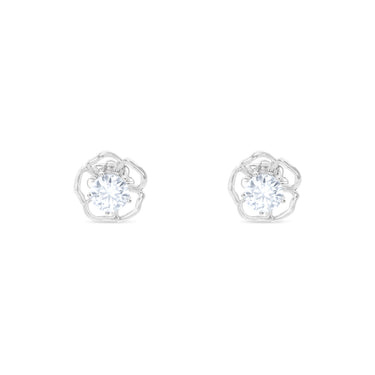
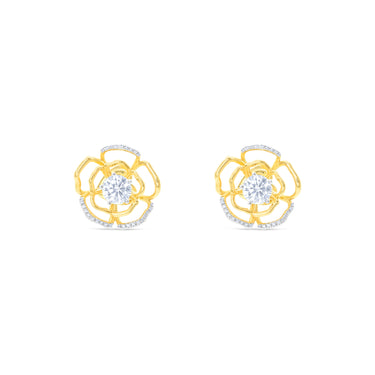
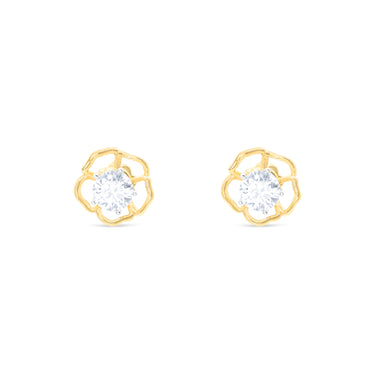
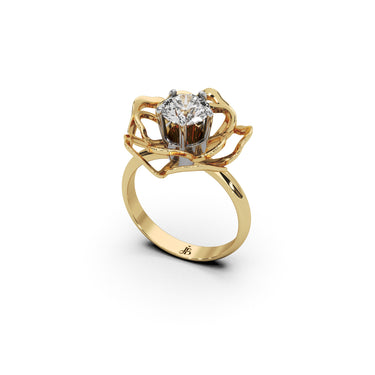
Just Brilliant’s jewelry direction centers on 18K gold. Choosing within that material still leaves meaningful differences: color, alloy, surface finish, band profile and the way the diamond is held. Begin with the complete ring, then examine each detail that contributes to it.
Understand the gold description
Eighteen-karat gold corresponds to 750 parts gold per thousand. The remaining alloy contributes to the metal’s properties and color. Yellow, white and rose gold should therefore be compared as specified materials, rather than judged by a color name alone.
For white gold, ask whether the surface is rhodium-plated and what future care the particular finish may require. If you have a known sensitivity to a metal, ask for the alloy information before purchase. A color description is not an ingredient list.
Choose the color around the wearer
Place the ring beside jewelry the wearer already owns. An engagement ring need not match every other piece, but seeing the metals together helps distinguish an intentional contrast from an accidental one.
Compare the actual creations under neutral light as well as the showroom’s lighting. A highly polished photograph may exaggerate the brightness of the metal. The preferred color is the one that works with the whole ring and the wearer’s taste, not a universal rule about complexion.

Read the complete setting
The shank is the band that encircles the finger; its shoulders are the sections approaching the center setting. Compare their width, thickness and transitions. A tapered shoulder narrows toward the diamond, while a straighter shoulder keeps a more continuous line. The difference changes the line of gold around the center.
View the proposed ring in its agreed size and with the selected diamond. A deeper stone may require a different profile from a shallower one, even within the same design family. For a commission, keep the dimensions and side view with the order.
Read the marks
A UK hallmark records an independent assessment of precious-metal fineness. Its compulsory components identify the registered sponsor, the fineness and the assay office. The sponsor is responsible for the submission; the mark does not necessarily identify the maker. London's assay-office symbol is a leopard's head.
The number 750 expresses gold content in parts per thousand, equivalent to 18K or 75% gold. A “750” stamp alone is only one element of that description. Have the seller explain the offered ring's markings and the applicable hallmarking arrangements.
Keep two entries in the purchase record: one for the gold's fineness, color, finish and marks; another for the diamond's origin and supplied documentation. Metal testing and diamond grading answer different questions.
Try the ring beside its future band
A setting chosen in isolation may later dictate the shape of the wedding band. Compare the pair before deciding, if possible. Look for how the edges meet and whether the two rings can be worn comfortably in the intended arrangement.
If the wearer already has a band, bring its dimensions or the ring itself to a fitting. Do not assume that a ring can be raised, lowered or substantially redesigned after purchase without affecting its construction.
Your selection in London
Contact Just Brilliant for a London appointment inquiry with your preferred gold color and setting profile. Confirm the viewing location, available options and the specifications for the actual ring before arranging a visit.
Metal-marking reference: Goldsmiths’ Company Assay Office — UK hallmarks.