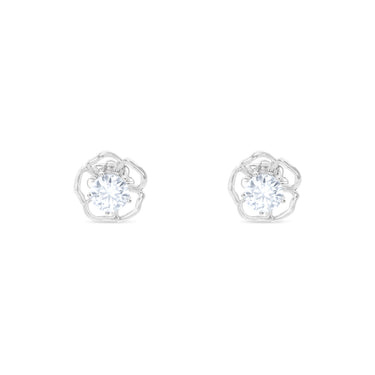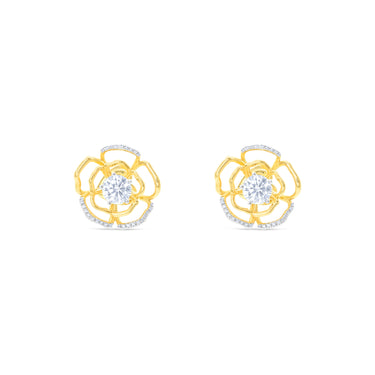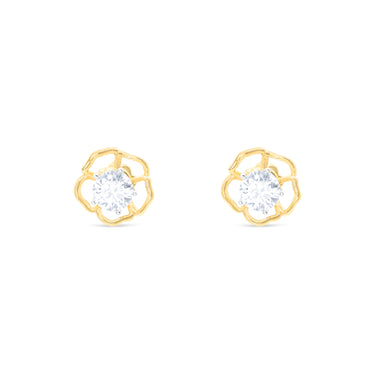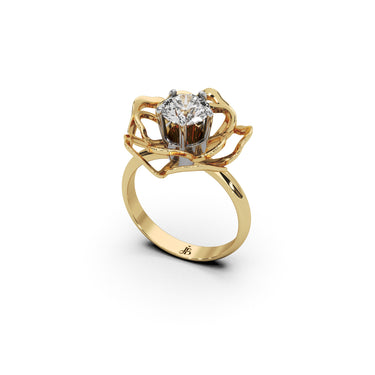


A diamond takes on the light around it. In 18K yellow, white or rose gold, neighboring D, E and F color grades can be harder to distinguish than a report suggests. All three belong to the colorless range of the conventional D-to-Z scale; the setting adds reflections without changing the documented grade.
Color grade and visible appearance
A laboratory assesses color under controlled conditions. The appearance of a mounted diamond is a different viewing situation: the observer sees light reflected from the setting and surroundings as well as from the stone.
| Grade | Position on the D-to-Z scale | Practical meaning |
|---|---|---|
| D | Highest color grade in this scale | A documented absence of detectable body color within the grading standard |
| E | Immediately below D | A colorless grade; inspect the actual stone rather than expecting an obvious yellow tint |
| F | Immediately below E | Also colorless; a neighboring grade need not create a readily visible difference in a jewel |
The D-to-Z system is not a simple quality ladder for fancy-color diamonds. An intentionally pink, yellow or blue diamond requires the relevant color description and grading context.
What 18K gold contributes
Yellow gold can introduce warm reflections around a diamond. White gold creates a different visual surround, and its surface may be rhodium plated. Rose gold brings its own reflected color. None of these reflections changes the stone's documented grade.
For a fair comparison, see D, E and F stones in the same metal color and a similar setting. Comparing a D solitaire in white gold with an F stone in yellow gold changes several variables at once.
A setting's basket, prongs and surrounding diamonds also matter. A warm reflection from a prong is not proof that the center stone was graded incorrectly.
A simple viewing method
Start with clean stones of similar shape, dimensions and cut style. Ask to view them against the same neutral background. Look under diffuse daylight or neutral indoor lighting, then view the intended setting.
Do not rely on a phone photograph to settle a one-grade difference. White balance, exposure, screen settings and reflected surroundings can all change the image. Photographs are useful for discussing the whole design, but they do not replace a grading report.
If surrounding stones will be used, request a comparison of the assembled color impression. A center stone and a halo can appear different even when neither has a visible problem on its own.
What to ask before choosing
Ask which laboratory issued the report, what color terminology that report actually uses, and whether it describes a natural or laboratory-grown diamond. Then ask to see the stone with the intended gold color.
Separate the stone from the setting in three steps
First compare loose stones on the same neutral background. Next view each candidate beside the intended metal sample or in a comparable mounting. Finally consider the center with any surrounding diamonds. Keep the light and viewing distance consistent at each step.
| Observation | Useful interpretation |
|---|---|
| A warmer appearance appears only beside yellow gold | Reflected metal color may be contributing |
| One candidate looks different before and after mounting | The viewing environment changed; the report grade did not |
| The halo draws attention away from the center | Compare the assembled design, not isolated color letters |
| A difference appears only in one phone photograph | Repeat the comparison directly before drawing a conclusion |
Do not use a yellow or pink fancy-color diamond as a substitute for an E or F comparison. Those are different color questions. Just Brilliant's Golden Aura, described in the collection as a fancy yellow laboratory-grown diamond design, illustrates how intentional color can become the focus of a jewel.
Choose the diamond in the surround you intend to wear. A preference observed consistently in that setting is more useful than a difference imagined from a letter.
Sources: GIA diamond color; GIA guide to buying a quality diamond.