

A pear diamond brings a rounded end and a tapering point into the same silhouette. Unlike a round center, it has an unmistakable direction, and that direction becomes part of the ring's identity.
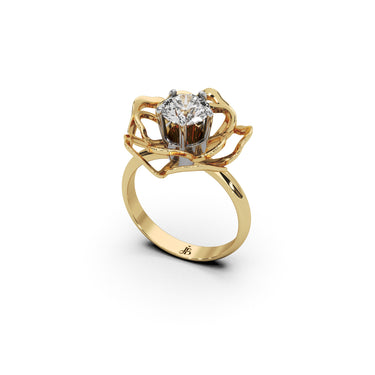
At Just Brilliant, pear solitaire designs and the double hidden halo pear ring explore this outline through different settings in 18K gold. The Maison's interest is in the relationship between the distinctive stone and the structure around it.
The orientation of the pear
The wearer may prefer the point directed toward or away from the fingertip. The choice changes the visual gesture on the hand and can alter the way the ring relates to another band.
Before assigning meaning to either direction, it is useful to consider the full outline. The rounded end, shoulders and point should read as a coherent shape, with their proportions suited to the intended design.
The appearance of the diamond as it moves also matters. Patterns of brightness and darkness belong to the individual stone and deserve more than a single photographic view.
Giving the point a considered setting
The pointed end requires particular attention in the setting because exposed tips can be vulnerable to impact. A protective design must still respect the silhouette that makes the pear distinctive.
The profile introduces further choices. A hidden halo places detail beneath the center, while a simpler solitaire keeps the surrounding composition more restrained.
When a lab grown diamond is selected, Just Brilliant's D color standard provides the color foundation. The setting then gives that stone a proportionate place on the hand.
The finished ring should allow the pear to retain its character: rounded and pointed, soft and directional, with each quality expressed through a precise surrounding form.