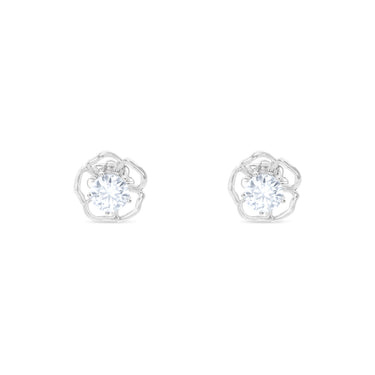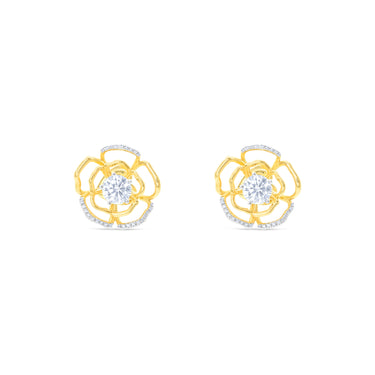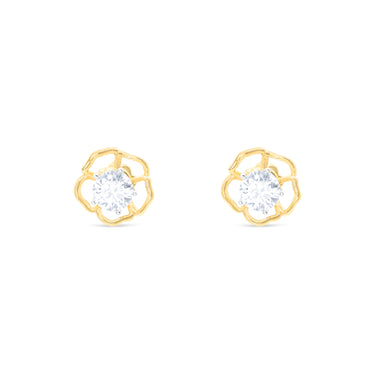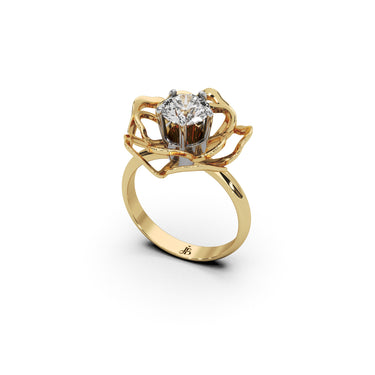


Just Brilliant brings D color lab grown diamonds into creations made with 18K gold. The two materials contribute different qualities: the diamond supplies its faceted reflections, while gold provides structure, contour and a surrounding palette.
Their relationship determines much of the jewel's character, whether the design is a concentrated stud or an elaborate ring.
What 18K describes
18K gold contains 75 percent gold by mass, with other metals forming the remainder of the alloy. The alloy influences color and working properties.
White, yellow and rose gold offer different visual contexts. Yellow gold gives the setting a warm presence; rose gold introduces a more copper toned note; white gold supports a cooler overall composition.
The precise alloy and finish belong to the individual jewel. Where white gold is rhodium plated, that surface may need attention over time.
Color around a colorless stone
A diamond can reflect aspects of its surroundings, including nearby gold. A warm setting can therefore influence the visual impression without changing the diamond's documented color grade.
For Just Brilliant, this makes gold color a creative decision rather than a change in the D color selection standard.
The width of the frame matters too. A fine prong and a broad bezel give the metal very different visible roles around the same shape.
The craftsmanship between materials
The gold must connect the stone to the rest of the jewel. Its gallery, shoulders, links or earring basket establish the architecture that makes the composition possible.
The finished surfaces then reveal those forms through reflection. A polished curve can carry the eye toward the diamond or become an expressive part of the design itself.
The Maison's interest lies in the complete relationship: a precise lab grown diamond standard, given an individual setting through the color and craftsmanship of 18K gold.