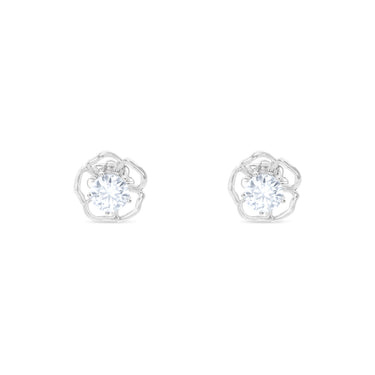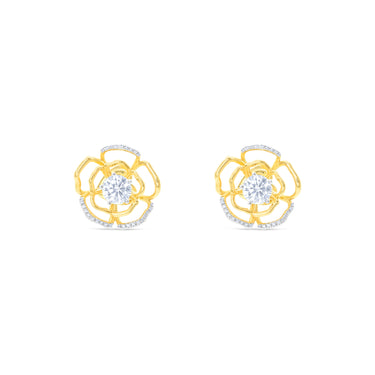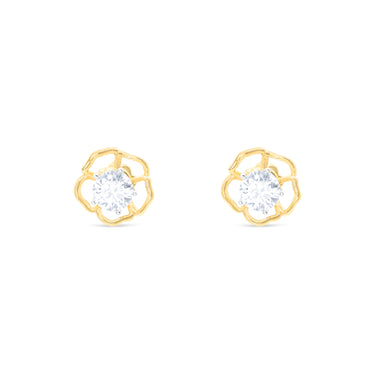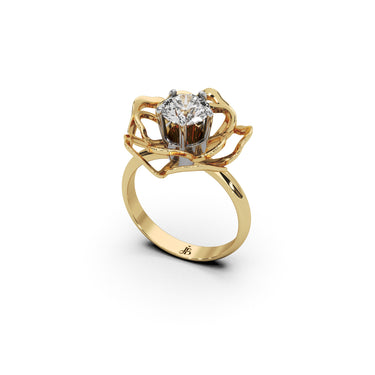


A ring may begin as an appealing outline, but it will be worn as a three dimensional object. The distance above the finger, the width of a shoulder and the curve of the interior all influence that experience.
For Just Brilliant, these relationships belong at the center of a considered design. A jewelry model offers a way to examine how an idea occupies space.
What a model can reveal
A model can make differences in height and volume easier to understand than a single drawing. Turning it changes the relationship between the center, the shoulders and the band.
A broad stone may call for a different visual transition into the shank from a narrow, elongated one. A setting that appears open from above may have a more substantial side profile.
These observations help refine the design conversation before the finished jewel is judged solely by its front view.
Considering the neighboring ring
When an engagement ring is intended to accompany a wedding band, the pair creates another set of proportions. The band may sit close, leave a deliberate interval or follow the center setting through a curve.
A model or a clear profile view can help explain these possibilities. The fit must ultimately be assessed for the particular rings and their dimensions.
A tool for refinement
A digital rendering, a physical model and a finished jewel provide different kinds of information. A rendering can communicate an idea; it cannot establish the actual appearance of a diamond or the final feel of a gold surface.
Just Brilliant's pursuit of precision gives each stage a purpose. The design becomes stronger when its attractive outline is supported by a convincing volume and a considered relationship to the person who will wear it.