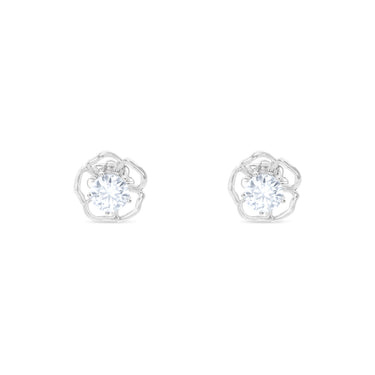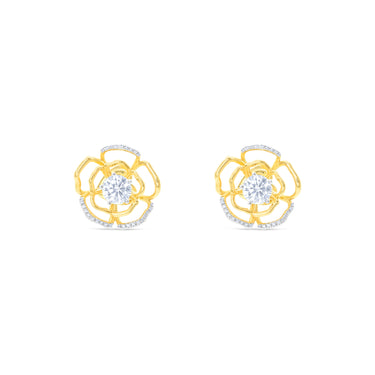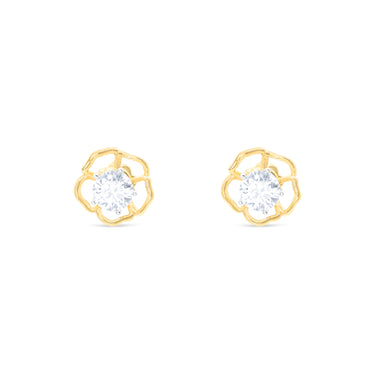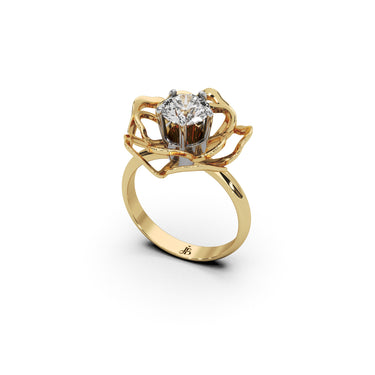


An elongated cushion diamond keeps the suggestion of a rectangle, softened at its corners. An oval follows a continuous curve. Both can create a lengthened impression on the hand, but their boundaries give a ring a different character: one balances corners and curves, while the other moves around an uninterrupted outline.
For a Just Brilliant engagement ring, that difference is a starting point for design. The shape of the diamond influences the position of the prongs, the approach of the shoulders and the space visible around the center. A thoughtful choice considers all three.
Look at the outline before the carat weight
Length to width ratio describes how elongated a stone is. Divide its length by its width to obtain the ratio. A diamond measuring 10 by 7 millimeters has a ratio of approximately 1.43. This is an arithmetic example, not a recommended proportion or a description of a stone available from Just Brilliant.
The ratio does not establish a diamond's beauty. It also does not describe its absolute size: a 10 by 7 millimeter outline and a 12 by 8.4 millimeter outline have the same ratio but occupy different areas. Keep both the individual measurements and their relationship in view.
Compare two real diamonds, not two names
| Question | Elongated cushion | Oval |
|---|---|---|
| Which boundary appeals to you? | Soft corners and a suggestion of straighter sides | A continuous curved perimeter |
| What should you examine? | The individual facet pattern and corner shape | The outline and changing reflections across the center |
| What should the setting reveal? | How the prongs frame the softened corners | How the prongs divide the curved perimeter |
Cushion diamonds can have noticeably different facet arrangements. The label alone does not tell you whether the reflections will appear broad or finely broken up. Ovals also deserve to be viewed in motion. A darker area through the middle should be assessed in ordinary viewing conditions rather than from one dramatically lit photograph.
A fair comparison on the hand
Ask to see the two stones at the same magnification and, where possible, against the same hand or ring size reference. Compare them facing upward and in profile. If one is shown in a heavy halo and the other as a loose stone, much of the apparent difference may come from presentation.
A useful fitting sequence is to decide first which outline feels right, then consider its scale, and finally examine the setting. Reversing that order can lead to choosing a size before knowing which shape you actually prefer.
Where Just Brilliant brings its perspective
D color is the Maison's selection standard for lab grown diamonds; it does not make every cushion or oval identical. The individual stone still asks for attention to clarity, dimensions and its appearance as it turns. In 18K gold, the surrounding structure should carry those proportions with purpose.
There is no need to make a choice according to a supposed ideal hand type. What matters is the relationship you see and feel: the width beside the finger, the line toward the knuckle and the profile in movement. The more personal ring is the one whose details remain persuasive after the first impression.