

Oriental Pearl Tower and Pudong skyline — Shanghai.
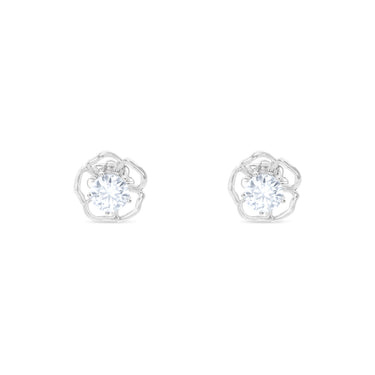
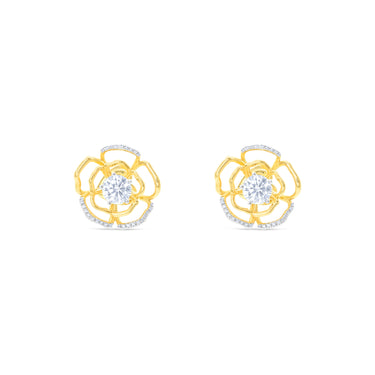
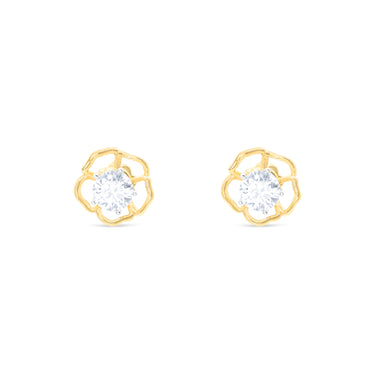
A pair of diamond studs brings two stones and two settings into one visual relationship. Choosing the pair in Shanghai means looking closely at that match: dimensions, appearance and the way each earring sits on its wearer.
A shared grade label or combined carat figure does not describe every aspect of the pair. Ask what has been matched and how that decision is represented in the specifications.
Compare the visible outlines
Place the two actual earrings side by side under consistent light. Compare each principal stone's length and width, its outline and the setting around it. Similar diamond weights can sit within different visible dimensions.
For a conventional matching pair, identify how the seller has matched size and appearance. For a deliberately asymmetric design, have the intended difference described. Then see the pair on the wearer, whose ears and piercing positions may differ.
Use photographs to discuss a visible difference, and relevant documentation or professional assessment for grading questions. Matching as a pair and grading as individual stones are related but distinct decisions.
Read the weights separately
A combined pair weight leaves the division open. As an illustration, 0.45 and 0.55 carat total 1.00 carat, as do two 0.50-carat stones. The totals are equal; the individual weights are different.
Request weight and face-up dimensions per principal stone, then view the actual pair together. Weight distribution alone does not establish visual matching. Dimensions, outlines and appearance under the same light provide further information.
For halo studs, keep accents separate from the centers. Record complete earring weight per ear as well: it concerns the object worn, while carat weight concerns its diamonds.
Consider the setting and fastening
Compare the dimensions, depth and post positions of the two earrings. Look at the backs supplied and have the actual closure demonstrated.
At a fitting, notice whether both earrings face forward in the intended way. The wearer’s ears may not be identical, so visual matching in a tray and matching on the wearer are related but different observations.
If support or another fastening is proposed, have compatibility assessed for the actual pair. Do not assume that unrelated backs are interchangeable.
Understand the documentation
Confirm whether the principal diamonds are natural or laboratory-grown and how their characteristics are described. If individual reports are included, establish which document corresponds to which stone.
Ask which details have been independently assessed and which are part of the seller’s finished-pair specification. A retailer’s description and a laboratory report should be identifiable as different documents.
For smaller stones or multi-stone designs, documentation may concern the pair more broadly. The important point is a precise account of what is actually supplied, without assuming every diamond has its own report.
Your selection in Shanghai
For a Shanghai stud inquiry, ask Just Brilliant for matched-scale views and the complete-pair specification. Include the preferred gold and fastening, then confirm viewing arrangements and any supplied report details for the individual stones.